


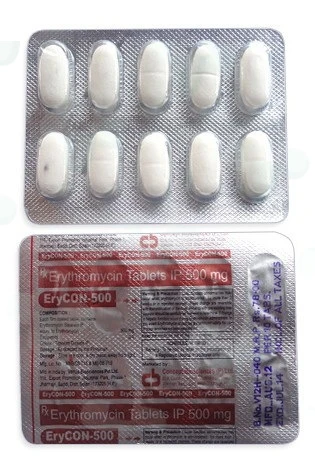
Erythromycin

Erythromycin is a trusted macrolide antibiotic commonly used to treat a broad range of bacterial infections affecting the skin, chest, and respiratory tract. By inhibiting bacterial growth, this proven medication delivers targeted relief from uncomfortable symptoms associated with conditions such as acne, ear infections, and bronchitis. You can conveniently order this premium treatment over the counter, enjoying swift access to an effective OTC remedy delivered straight to your door. Formulated to rigorous quality standards, it serves as a dependable choice for Australians managing everyday bacterial conditions effectively. Add Erythromycin to your home wellness supplies today to support your body’s natural defences and ensure a prompt recovery.
Delivery: 5–21 days (depending on the shipping method selected)
Extra 10% off with code: EXTRA10
Each dosage option has its own packaging variants.
Erythromycin Macrolide Antibiotic Mechanism of Action Clinical Use and Side Effects
Erythromycin stands as a cornerstone in the world of antibiotics, a trusted ally in combating a wide array of bacterial infections. For decades, this macrolide antibiotic has been instrumental in treating conditions ranging from common respiratory ailments to specific skin issues, proving its efficacy and reliability. Its broad spectrum of activity makes it a valuable therapeutic option, particularly for individuals who may have sensitivities to other antibiotic classes, such as penicillin. Understanding Erythromycin’s benefits, how it works, and its appropriate uses is essential for anyone seeking effective treatment for bacterial infections. This detailed guide aims to provide Australian consumers with all the crucial information needed to make informed decisions about their health.
At our online pharmacy, we are dedicated to offering convenient and reliable access to essential medications like Erythromycin across Australia. We understand the importance of timely and straightforward access to effective treatments, especially for busy individuals and those in regional areas. Our commitment is to provide a seamless experience, ensuring you can acquire the medication you need with ease and confidence. Explore this comprehensive resource to learn more about Erythromycin and discover why it remains a preferred choice for many Australians managing bacterial infections, readily available for your healthcare needs.
Understanding Erythromycin: A Powerful Antibiotic
Erythromycin is a well-established macrolide antibiotic, originally discovered in the mid-20th century. Its introduction revolutionized the treatment of bacterial infections, offering an alternative for patients who couldn’t tolerate penicillin or other beta-lactam antibiotics. Derived from the bacterium Saccharopolyspora erythraea, Erythromycin works by targeting and inhibiting bacterial protein synthesis, a crucial process for bacterial growth and replication. By disrupting this fundamental mechanism, Erythromycin effectively stops the infection from spreading and allows the body’s immune system to clear the remaining bacteria.
This medication is renowned for its effectiveness against a variety of gram-positive bacteria and certain gram-negative bacteria, as well as atypical bacteria. Its versatility makes it suitable for treating infections in different parts of the body, from the respiratory tract to the skin. The ongoing relevance of Erythromycin in modern medicine, even with the advent of newer antibiotics, speaks volumes about its enduring efficacy and safety profile. Its role in Australian healthcare continues to be significant, providing a reliable option for many common and sometimes complex bacterial conditions.
How Erythromycin Works: Mechanism of Action
The mechanism of action of Erythromycin is elegantly precise, focusing on the bacterial ribosomes. Specifically, Erythromycin binds reversibly to the 50S subunit of the bacterial ribosome. This binding prevents the translocation of peptidyl-tRNA, essentially blocking the addition of new amino acids to the growing peptide chain. Without the ability to synthesize essential proteins, bacteria cannot grow, divide, or perform their metabolic functions, leading to their inhibition or death.
This bacteriostatic action, meaning it primarily inhibits bacterial growth rather than directly killing them, allows the body’s immune system to effectively clear the incapacitated bacteria. At higher concentrations, Erythromycin can sometimes exhibit bactericidal effects, actively killing bacteria. This dual potential, combined with its specific targeting of bacterial ribosomes, ensures that host cells, which have different ribosomal structures, are largely unaffected, contributing to its favorable safety profile for human use. This targeted approach minimises harm to the patient while maximizing its impact on the infection, making it a smart choice for many Australians.
Key Indications for Erythromycin Use
Erythromycin is a broad-spectrum antibiotic approved for treating a wide range of bacterial infections. Its versatility makes it a valuable option in many clinical scenarios. Here are some of the primary indications where Erythromycin proves highly effective:
- Respiratory Tract Infections: Erythromycin is frequently prescribed for various respiratory conditions, including bacterial pneumonia, bronchitis, legionnaires’ disease, and pertussis (whooping cough). It is particularly useful in treating atypical pneumonias caused by organisms like Mycoplasma pneumoniae and Chlamydia pneumoniae, which are often resistant to penicillin.
- Skin and Soft Tissue Infections: For infections affecting the skin and underlying tissues, such as cellulitis, erysipelas, impetigo, and erythrasma, Erythromycin can be a potent treatment. Its ability to penetrate skin tissues makes it effective against bacteria commonly found in these infections. It is also used for acne vulgaris, reducing inflammation and bacterial growth.
- Sexually Transmitted Infections (STIs): Certain STIs, including chlamydial infections (such as cervicitis, urethritis, and conjunctivitis in newborns caused by Chlamydia trachomatis) and syphilis (especially for penicillin-allergic patients), can be effectively treated with Erythromycin.
- Ocular Infections: Erythromycin ophthalmic preparations are used to treat bacterial conjunctivitis and other superficial eye infections. It is also routinely administered to newborns to prevent ophthalmia neonatorum caused by gonorrhea or chlamydia.
- Gastrointestinal Infections: In some cases, Erythromycin can be used to treat specific gastrointestinal infections, such as those caused by Campylobacter jejuni. It also has a unique prokinetic effect, meaning it can stimulate gut motility, sometimes used off-label for conditions like gastroparesis, although this is distinct from its antibiotic function.
- Prophylaxis: Erythromycin can also be used as a prophylactic agent in certain situations, such as preventing bacterial endocarditis in individuals at high risk undergoing dental procedures, or preventing recurrent rheumatic fever.
- Diphtheria: It is an effective treatment for diphtheria, helping to eradicate the bacteria that cause this serious illness.
Given its wide spectrum of action and efficacy against various bacterial pathogens, Erythromycin remains a vital antibiotic in managing infections across Australia, offering a reliable therapeutic option for many patients.
Dosage and Administration Guidelines
The dosage and administration of Erythromycin can vary significantly depending on the type and severity of the infection, the patient’s age and weight, and the specific formulation of the drug. Erythromycin is available in several forms, including tablets, capsules, oral suspensions, and topical preparations. It is crucial to follow the recommended dosage instructions carefully to ensure efficacy and minimize potential side effects.
General Oral Dosage (Adults):
- For most bacterial infections, the typical adult oral dose ranges from 250 mg to 500 mg, taken every 6 to 12 hours.
- For more severe infections, doses might be increased, but always within safe limits.
- Treatment duration usually ranges from 7 to 14 days, though some conditions may require shorter or longer courses. It is vital to complete the entire course of medication, even if symptoms improve, to prevent the resurgence of infection and the development of antibiotic resistance.
Specific Considerations:
- Oral Preparations: Erythromycin tablets and capsules should generally be taken with a full glass of water. Some formulations are enteric-coated to protect the drug from stomach acid, which can improve absorption and reduce gastrointestinal side effects. It is often recommended to take Erythromycin on an empty stomach (1 hour before or 2 hours after meals) for optimal absorption, although some individuals may tolerate it better with food to reduce stomach upset.
- Oral Suspension: For children or individuals who have difficulty swallowing pills, an oral suspension is available. Dosing for children is typically calculated based on body weight. The suspension must be shaken well before each use.
- Topical Preparations: For skin infections like acne, topical Erythromycin is applied directly to the affected area, usually once or twice daily. This targets the infection locally with fewer systemic side effects.
- Ophthalmic Preparations: For eye infections, an Erythromycin ointment is applied to the affected eye(s) several times a day.
Adherence to the prescribed regimen is paramount for successful treatment outcomes. Skipping doses or discontinuing the medication prematurely can lead to inadequate treatment, potential relapse, and contribute to antibiotic resistance. For the convenience of our Australian customers, this effective antibiotic is available for straightforward acquisition through our platform, ensuring you can maintain your treatment plan without unnecessary delays.
Potential Side Effects of Erythromycin
Like all medications, Erythromycin can cause side effects, although not everyone experiences them. Most side effects are mild and temporary, but some can be more serious. Being aware of potential reactions is important for safe medication use.
Common Side Effects:
- Gastrointestinal disturbances: These are the most frequently reported side effects and include nausea, vomiting, abdominal pain, stomach cramps, and diarrhoea. Taking Erythromycin with food or choosing an enteric-coated formulation can sometimes help mitigate these symptoms.
- Loss of appetite: Some individuals may experience a temporary reduction in appetite.
Less Common Side Effects:
- Allergic reactions: While rare, allergic reactions can occur, presenting as skin rash, itching, hives, or swelling (particularly of the face, tongue, or throat).
- Liver effects: In some cases, Erythromycin can cause temporary increases in liver enzymes or, more rarely, cholestatic hepatitis. Symptoms might include yellowing of the skin or eyes (jaundice), dark urine, or unusual tiredness.
- Hearing disturbances: Reversible hearing loss or tinnitus (ringing in the ears) has been reported, especially with high doses or in patients with kidney or liver impairment.
- Cardiac effects: Erythromycin can prolong the QT interval on an electrocardiogram (ECG), which, in rare cases, can lead to a serious irregular heartbeat (arrhythmia). This is more of a concern in patients with pre-existing heart conditions or those taking other medications that affect the QT interval.
Serious Side Effects (Seek immediate medical attention if any of these occur):
- Severe allergic reactions (anaphylaxis): Difficulty breathing, severe dizziness, collapse.
- Severe diarrhoea (Clostridioides difficile-associated diarrhoea): Persistent, severe diarrhoea, abdominal pain, fever, bloody stools. This can occur during or even several weeks after treatment.
- Signs of liver damage: Persistent nausea/vomiting, severe abdominal pain, dark urine, yellowing of eyes/skin.
- Irregular heartbeat: Palpitations, dizziness, fainting.
It is important to discuss any concerns or side effects you experience while taking Erythromycin. This comprehensive antibiotic offers significant benefits for many Australian patients, and understanding its side effects helps ensure safer use. Our platform offers convenient access to this essential medication, ensuring you can acquire it without delay.
Important Considerations and Precautions
Before using Erythromycin, it’s essential to be aware of several important considerations and precautions to ensure its safe and effective use. While Erythromycin is a powerful antibiotic, certain factors can influence its suitability and potential for adverse effects.
Drug Interactions:
Erythromycin is a potent inhibitor of the cytochrome P450 enzyme system (specifically CYP3A4) in the liver. This means it can significantly increase the levels of other medications that are metabolized by this enzyme, leading to enhanced effects or increased toxicity. Some important drug interactions include:
- Statins (e.g., simvastatin, lovastatin): Increased risk of muscle toxicity (myopathy and rhabdomyolysis).
- Anticoagulants (e.g., warfarin): Enhanced anticoagulant effect, leading to an increased risk of bleeding.
- Antihistamines (e.g., terfenadine, astemizole – though these are largely withdrawn in Australia): Increased risk of severe cardiac arrhythmias.
- Benzodiazepines (e.g., midazolam, triazolam): Increased sedative effects.
- Ergot alkaloids (e.g., ergotamine, dihydroergotamine): Increased risk of severe vasoconstriction (ergotism), leading to ischaemia.
- Digoxin: Increased digoxin levels, potentially leading to toxicity.
- Theophylline: Increased theophylline levels, potentially leading to toxicity.
- Carbamazepine, Valproate, Phenytoin: Increased levels of these anticonvulsants.
Always inform yourself of any other medications you are currently taking, including over-the-counter drugs and herbal supplements, before starting Erythromycin.
Special Populations:
- Pregnancy and Breastfeeding: Erythromycin is generally considered safe for use during pregnancy, especially when other antibiotics are contraindicated. It is classified as pregnancy category B. Small amounts of Erythromycin are excreted into breast milk, but it is generally considered compatible with breastfeeding. Nevertheless, careful consideration should be given.
- Paediatric Use: Erythromycin is commonly used in children, with dosages adjusted based on weight and age.
- Elderly Patients: Older adults may be more susceptible to certain side effects, particularly hearing loss and cardiac effects, and careful monitoring is advised.
- Patients with Liver Impairment: Erythromycin is primarily metabolized by the liver. Patients with significant liver disease may require dose adjustments or closer monitoring due to an increased risk of drug accumulation and liver toxicity.
- Patients with Kidney Impairment: While less significantly affected than liver function, dose adjustments may be considered in severe kidney impairment, particularly for formulations that have renal excretion.
Allergies:
Individuals with a known allergy to Erythromycin or other macrolide antibiotics should avoid its use. Always check for previous allergic reactions to medications.
Resistance:
Like all antibiotics, prolonged or inappropriate use of Erythromycin can contribute to the development of bacterial resistance. It is crucial to use it only when genuinely needed and to complete the full course of treatment as directed to minimize this risk. This responsible approach ensures that antibiotics remain effective for everyone in Australia.
Understanding these important considerations ensures that Erythromycin can be used safely and effectively, providing maximum benefit for your health needs. Our online pharmacy provides a convenient way to access Erythromycin, simplifying your path to treatment.
Why Choose Our Online Pharmacy for Erythromycin?
In today’s fast-paced world, convenience and reliability are paramount, especially when it comes to healthcare. Our online pharmacy is committed to providing Australian customers with seamless access to essential medications like Erythromycin, making your health management simpler and more efficient. When you choose us, you are opting for a service that prioritises your needs with a focus on ease and accessibility.
One of the key advantages of selecting our platform is the straightforward acquisition process. We understand that navigating traditional pharmacy systems can sometimes be cumbersome and time-consuming. That’s why we have streamlined our services to ensure that you can obtain Erythromycin absolutely freely, without the need for a prescription or a specialist consultation. This approach is designed to provide unprecedented convenience, allowing you to quickly access the treatment you require, whenever you need it, from anywhere in Australia.
We pride ourselves on offering a hassle-free experience. Our user-friendly website is designed to make your shopping experience intuitive and quick. You can browse, select, and purchase your medications with just a few clicks, eliminating the need for travel, waiting in queues, or scheduling appointments. This saves you valuable time and effort, making it ideal for busy urban dwellers in major Australian cities, as well as those in more remote regional areas who may have limited access to physical pharmacies.
Furthermore, our robust delivery network ensures that your Erythromycin reaches you promptly and discreetly, no matter where you are located across Australia. We package all orders with care, safeguarding your privacy and ensuring the integrity of your medication upon arrival. We believe that everyone in Australia should have equitable access to necessary treatments, and our delivery service is a testament to this commitment.
By choosing our online pharmacy, you are not just purchasing medication; you are investing in a superior healthcare experience defined by convenience, efficiency, and accessibility. We are dedicated to supporting the health of Australians by making essential antibiotics like Erythromycin readily available, empowering you to take control of your well-being with confidence and ease.
Detailed Characteristics of Erythromycin
To provide a comprehensive overview, the following table summarises the key characteristics of Erythromycin, highlighting its essential properties and uses.
| Characteristic | Description |
|---|---|
| Drug Class | Macrolide antibiotic |
| Mechanism of Action | Binds to the 50S ribosomal subunit of bacteria, inhibiting protein synthesis. Primarily bacteriostatic, can be bactericidal at higher concentrations. |
| Spectrum of Activity | Primarily effective against Gram-positive bacteria (e.g., Streptococcus pneumoniae, Staphylococcus aureus), some Gram-negative bacteria (e.g., Neisseria gonorrhoeae), and atypical bacteria (e.g., Mycoplasma pneumoniae, Chlamydia trachomatis, Legionella pneumophila). |
| Common Indications | Respiratory tract infections (pneumonia, bronchitis, pertussis), skin and soft tissue infections (cellulitis, impetigo, acne), sexually transmitted infections (chlamydia, syphilis for penicillin-allergic), ocular infections (conjunctivitis), diphtheria, prophylaxis for endocarditis. |
| Available Forms | Oral tablets, capsules, oral suspension, topical cream/gel, ophthalmic ointment. |
| Typical Adult Oral Dosage | 250 mg to 500 mg every 6 to 12 hours, depending on infection severity. Duration typically 7-14 days. |
| Administration Notes | Often recommended on an empty stomach (1 hour before or 2 hours after meals) for optimal absorption, though can be taken with food to reduce GI upset. Complete the full course. |
| Metabolism | Primarily hepatic (liver) metabolism via the CYP3A4 enzyme system. |
| Excretion | Mainly through bile and faeces; a small amount via urine. |
| Common Side Effects | Nausea, vomiting, abdominal pain, stomach cramps, diarrhoea, loss of appetite. |
| Serious Side Effects | Allergic reactions (rash, hives, swelling), severe diarrhoea (Clostridioides difficile), liver problems (jaundice), hearing loss, QT interval prolongation (cardiac arrhythmias). |
| Key Drug Interactions | Potent inhibitor of CYP3A4, increasing levels of statins, warfarin, carbamazepine, theophylline, digoxin, certain antihistamines, and ergot alkaloids. |
| Pregnancy Category | Category B (considered generally safe). |
| Breastfeeding | Generally considered compatible; small amounts excreted in breast milk. |
| Storage | Store at room temperature, away from moisture and heat. Keep oral suspension refrigerated after reconstitution. |
Frequently Asked Questions About Erythromycin
Here are answers to some of the most common questions our Australian customers have about Erythromycin.
1. How quickly does Erythromycin start working?
Erythromycin typically starts to inhibit bacterial growth within a few hours of the first dose. However, you might not feel significant improvement in your symptoms for 24 to 48 hours, or even longer for more severe infections. It’s crucial to continue taking the medication as directed for the entire course to ensure complete eradication of the infection.
2. Can I stop taking Erythromycin once I feel better?
No, it is very important to complete the entire course of Erythromycin, even if your symptoms improve or disappear. Stopping early can lead to the infection returning and may contribute to the development of antibiotic resistance, making future infections harder to treat. Always follow the full prescribed duration.
3. What should I do if I miss a dose of Erythromycin?
If you miss a dose, take it as soon as you remember, unless it’s almost time for your next scheduled dose. In that case, skip the missed dose and resume your regular dosing schedule. Do not double the dose to catch up, as this can increase the risk of side effects.
4. Can Erythromycin be used for viral infections?
No, Erythromycin, like all antibiotics, is specifically designed to treat bacterial infections. It is not effective against viral infections such as the common cold, flu, or COVID-19. Using antibiotics unnecessarily for viral infections can lead to antibiotic resistance without providing any benefit.
5. Are there specific foods or drinks I should avoid while taking Erythromycin?
While taking Erythromycin, it is generally advised to avoid grapefruit or grapefruit juice, as it can interfere with the metabolism of Erythromycin and potentially increase its levels in the body, leading to more side effects. Otherwise, there are no strict dietary restrictions, although some people find taking it with a light meal can help reduce gastrointestinal upset.
6. How should I store Erythromycin?
Oral tablets and capsules of Erythromycin should be stored at room temperature, away from direct light, heat, and moisture. Erythromycin oral suspension, once reconstituted, usually needs to be refrigerated and discarded after a specific period (check the packaging for exact instructions, typically 7-14 days). Always keep all medications out of reach of children and pets.
7. Can I take Erythromycin with other medications?
Erythromycin can interact with many other medications, potentially altering their effects or increasing the risk of side effects. It’s crucial to be aware of any medications you are taking, including over-the-counter drugs, herbal supplements, and vitamins. For a safe approach, always cross-reference with known interactions, especially if you are on medications for heart conditions, blood thinning, or cholesterol. Our platform ensures straightforward access to Erythromycin, but understanding interactions is key for safe use.
8. Is Erythromycin effective against acne?
Yes, Erythromycin is often used to treat acne, especially moderate to severe inflammatory acne. It works by reducing the number of acne-causing bacteria on the skin and also has anti-inflammatory properties. It is available in both oral and topical formulations for this purpose. Many Australians have found success with Erythromycin in managing their acne.
9. What are the signs of an allergic reaction to Erythromycin?
Signs of an allergic reaction can include skin rash, itching, hives, swelling (especially of the face, tongue, or throat), severe dizziness, or trouble breathing. If you experience any of these symptoms, seek immediate medical attention. Serious allergic reactions are rare but require urgent care.
10. How does Erythromycin compare to other antibiotics like Penicillin?
Erythromycin is often used as an alternative for individuals allergic to penicillin. While both are effective antibiotics, they belong to different classes and work through different mechanisms. Penicillin is a beta-lactam antibiotic that interferes with bacterial cell wall synthesis, whereas Erythromycin is a macrolide that inhibits protein synthesis. Each has its specific spectrum of activity, making them suitable for different types of infections.
Australian Customer Testimonials
Here’s what some of our satisfied Australian customers and experts have to say about their experience with Erythromycin:
“As a busy professional in Sydney, I sometimes struggle with recurring sinus infections. Erythromycin has been a lifesaver for me on multiple occasions. What truly makes a difference is the convenience of being able to acquire it through this online platform without the usual delays. The delivery to my apartment in the CBD is always swift, and I appreciate the ease of access. It works effectively every time, and I’ve experienced minimal side effects when taken as directed. This service has genuinely streamlined how I manage my health needs.” – Liam F., Sydney, NSW
“I’ve used Erythromycin for various skin infections over the years, and it consistently delivers positive results. Recently, I needed a course for a persistent skin issue, and finding it available for direct purchase from this online pharmacy was incredibly helpful. Living in regional Queensland, getting to a physical pharmacy can be a trek, so having reliable, accessible delivery right to my doorstep is invaluable. The product always arrives well-packaged and quickly. It’s a dependable antibiotic that I trust, and this platform makes it incredibly easy for Australians everywhere to get what they need.” – Brenda J., Cairns, QLD
Erythromycin continues to be a crucial antibiotic for a wide range of bacterial infections, offering reliable and effective treatment for many Australians. Its established track record, coupled with its broad spectrum of activity, makes it an indispensable component of modern healthcare. We are proud to provide a convenient and efficient way for you to access this vital medication. Our commitment to straightforward access ensures that your health needs are met with ease, allowing you to manage bacterial infections effectively and confidently. Choose our platform for your Erythromycin needs and experience the simplicity of modern healthcare delivery across Australia.
| Dosage | 250mg, 500mg |
|---|---|
| Package | 60 pills, 90 pills, 120 pills, 180 pills, 270 pills, 360 pills |
| Active Ingredient | Erythromycin |
| Active Ingredient |
Be the first to review “Erythromycin”
You must be logged in to post a review.
Related products








Reviews
There are no reviews yet.